8 API Security Best Practices for 2025

Protecting Your APIs in the Modern Landscape
APIs are essential for connecting applications and services. They allow different systems to communicate and share data seamlessly. However, this interconnectedness also exposes APIs to security risks. Protecting your APIs is crucial for safeguarding sensitive data, maintaining system integrity, and preventing breaches. To fully understand API security, it's crucial to recognize the importance of APIs as building blocks connecting applications and services, as discussed in this article on 10 API Security Best Practices for Developers.
This listicle presents eight API security best practices, providing actionable insights for developers working with various technologies, including Laravel, Node.js, social media integrations, and secure tunneling solutions. Whether you’re a freelancer seeking Upwork opportunities, a seasoned web developer, or just starting with Linux environments using WSL 2, these practices will help you build secure and resilient APIs.
This list focuses on practical implementation. You'll learn how to apply these API security best practices with clear explanations and relevant code snippets. Each practice is equally important, contributing to a comprehensive security strategy for your APIs.
We'll cover these key areas:
Strong Authentication and Authorization: Implementing robust mechanisms to verify user identities and control access.
Input Validation and Sanitization: Preventing malicious data from entering your system.
Rate Limiting and Throttling: Protecting against abuse and denial-of-service attacks.
HTTPS and Transport Layer Security: Encrypting communication to ensure data confidentiality and integrity.
Comprehensive API Logging and Monitoring: Tracking API activity for threat detection and incident response.
Error Handling and Information Disclosure Prevention: Minimizing the risk of revealing sensitive information through error messages.
API Versioning and Deprecation Management: Maintaining backward compatibility and ensuring a smooth transition between API versions.
Secure API Gateway Implementation: Centralizing API management and security enforcement.
By implementing these API security best practices, you can build robust APIs that are prepared for the security challenges of 2025 and beyond. This listicle gets straight to the point, providing clear, actionable guidance you can implement immediately. Let's dive in.
1. Implement Strong Authentication and Authorization
API security hinges on verifying user identities and controlling their access to resources. Strong authentication confirms who a user is, often through multiple factors, like a password and a one-time code. Authorization, on the other hand, dictates what an authenticated user is permitted to do within the API. This powerful combination forms the bedrock of API security best practices, ensuring only legitimate users can interact with specific resources according to their assigned roles and permissions.

When considering how to protect your APIs, it's important to understand common security pitfalls. For example, many small businesses overlook key security practices, as detailed in this article about the cybersecurity mistakes of small companies. Implementing strong authentication and authorization helps avoid these common vulnerabilities.
Why Strong Authentication and Authorization Matters
Weak or absent authentication and authorization mechanisms leave APIs vulnerable to unauthorized access and data breaches. Imagine an API that allows access to sensitive user data with just a username. An attacker could easily gain access through brute-force attacks or credential stuffing. Robust authentication and authorization prevent such scenarios by adding layers of security. This ensures only verified users with the necessary permissions can access specific API resources.
Examples of Strong Authentication and Authorization in Action
Several popular services showcase effective authentication and authorization in practice:
Google APIs: Leverage OAuth 2.0, allowing users to grant third-party applications access to their Google data without sharing their passwords.
GitHub API: Utilizes personal access tokens, giving users granular control over what data and actions each token can access.
Stripe API: Employs secret keys (for server-side operations) and publishable keys (for client-side operations) to ensure secure communication and restrict access to sensitive account information.
Learn more about implementing strong authentication and authorization with the Facebook PHP SDK. This provides a practical example of how these principles can be applied in real-world scenarios.
Implementing Strong Authentication and Authorization: Best Practices
Here's how you can bolster your API's security:
Embrace Industry Standards: Adopt established protocols like OAuth 2.0 and OpenID Connect (OIDC) for secure and standardized authentication flows.
Uphold Least Privilege: Grant users only the minimum necessary permissions required to perform their tasks. This limits the potential damage from compromised accounts.
Regularly Rotate Credentials: Rotate API keys and tokens frequently to minimize the impact of a potential security breach.
Utilize JWTs with Expiration: Implement JSON Web Tokens (JWTs) with appropriate expiration times to control access duration and mitigate risks from long-lived tokens.
Secure Credential Storage: Store sensitive credentials, like API keys and secrets, using robust encryption methods. Never store them directly in code or configuration files.
By adhering to these API security best practices, you can create a more secure environment for your users and protect your data from unauthorized access.
2. Input Validation and Sanitization
Input validation ensures all data received by your API conforms to expected formats, types, and ranges before any processing occurs. Think of it as a gatekeeper, checking the validity of every piece of data entering your system. Sanitization, a closely related process, cleanses potentially harmful input, neutralizing injection attacks and preventing data corruption. Together, these two processes form the first line of defense against malicious payloads targeting your API.
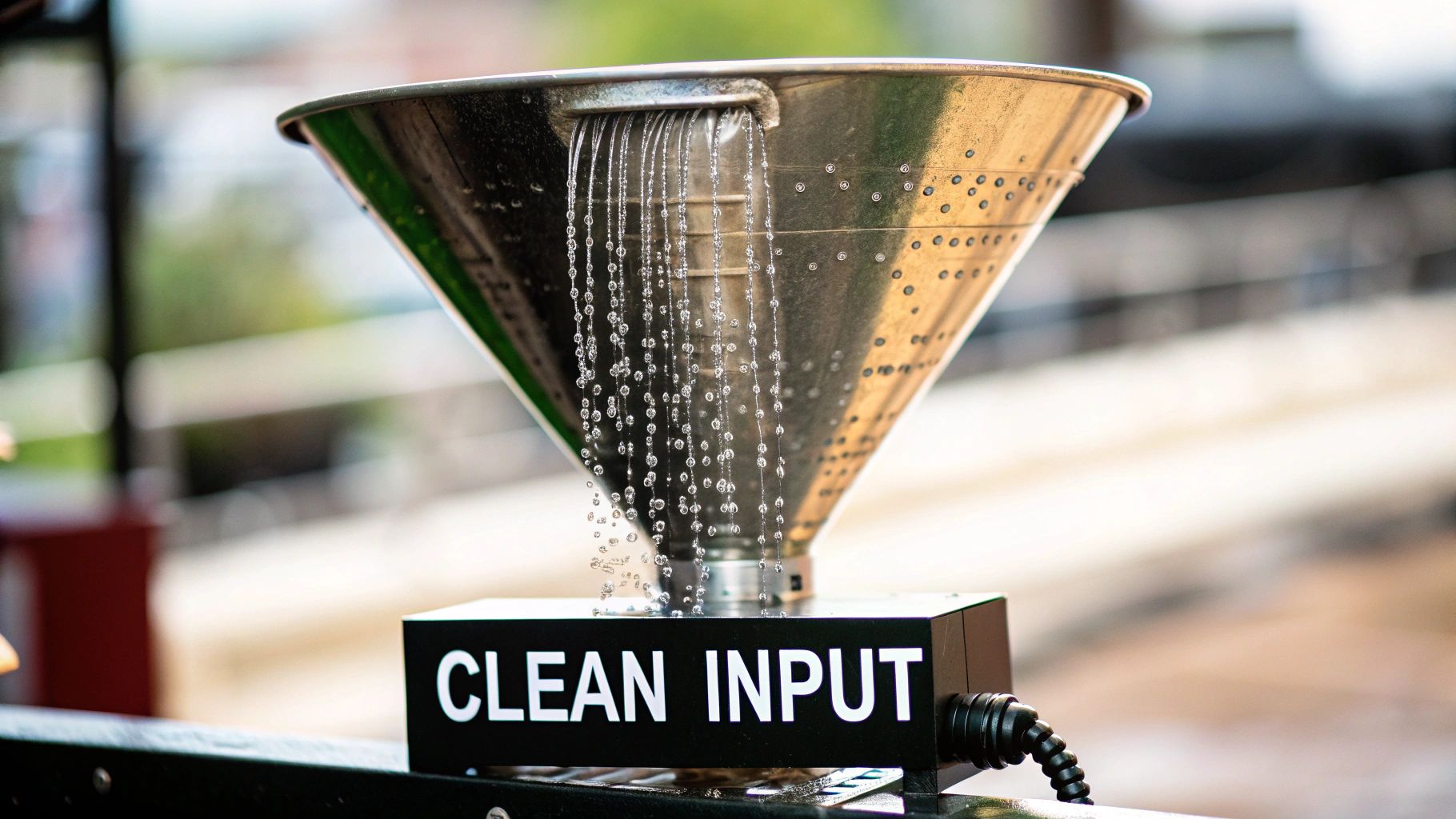
When implementing strong authentication and authorization, consider exploring options like API authentication to further enhance your API's security posture. Input validation and sanitization act as additional layers of protection, preventing malformed or malicious data from exploiting vulnerabilities within your application logic.
Why Input Validation and Sanitization Matters
Failing to validate and sanitize input can lead to severe security vulnerabilities, including SQL injection, cross-site scripting (XSS), and command injection. Imagine a scenario where user input directly influences a database query without proper validation. An attacker could craft malicious input to manipulate the query, potentially gaining access to sensitive data or even controlling the entire database. Robust input validation and sanitization prevent such attacks by ensuring all incoming data is safe and conforms to the expected structure.
Examples of Input Validation and Sanitization in Action
Many popular services demonstrate effective input validation and sanitization practices:
PayPal API: Rigorously validates payment amounts and currency codes, ensuring all transactions adhere to predefined formats and limits.
Twitter API: Sanitizes tweet content to remove harmful HTML tags or scripts, preventing XSS attacks and maintaining platform integrity.
Banking APIs: Validate account numbers and transaction amounts, enforcing data integrity and preventing fraudulent activities.
Implementing Input Validation and Sanitization: Best Practices
Here are some essential practices for implementing robust input validation and sanitization:
Validate on Both Client and Server Sides: Client-side validation enhances user experience by providing immediate feedback, while server-side validation is crucial for security as it cannot be bypassed by malicious users.
Use Whitelist Validation: Define acceptable input formats and reject anything that doesn't conform. This is more secure than blacklisting specific characters or patterns, as attackers can often find ways to circumvent blacklists.
Implement Parameterized Queries: For database operations, use parameterized queries or prepared statements to prevent SQL injection vulnerabilities.
Sanitize Output as Well as Input: While input sanitization protects against injection attacks, output sanitization prevents data corruption and ensures data consistency.
Use Established Validation Libraries: Leverage existing validation libraries specific to your programming language or framework. These libraries provide pre-built functions and patterns for common validation tasks, saving you development time and improving code maintainability.
By diligently applying these api security best practices, you create a robust barrier against various attack vectors, safeguarding your API and protecting your users' data.
3. Rate Limiting and Throttling
Rate limiting and throttling are essential API security best practices. They act as gatekeepers, controlling the flow of incoming requests. Rate limiting restricts the number of requests a client can make within a specific timeframe (e.g., 100 requests per minute). Throttling, on the other hand, manages the speed at which these requests are processed, smoothing out bursts and preventing overload. This combined approach prevents abuse, ensures fair resource usage, and safeguards against denial-of-service (DoS) attacks.

Imagine an API without rate limiting. A malicious actor could flood the API with requests, overwhelming the server and denying service to legitimate users. Rate limiting and throttling prevent this by setting clear boundaries. This ensures fair access and maintains API availability for everyone.
Why Rate Limiting and Throttling Matters
Without these controls, your API is vulnerable to various threats. DoS attacks can cripple your service, while abusive usage can drain resources and impact performance for all users. Rate limiting and throttling provide a crucial defense against these threats, maintaining API stability and availability.
Examples of Rate Limiting and Throttling in Action
Many popular APIs employ these practices:
Twitter API: Limits the number of requests within a 15-minute window.
GitHub API: Sets hourly request limits for authenticated users.
Google Maps API: Uses daily quotas and rate limits.
Reddit API: Restricts requests to a certain number per minute.
These examples demonstrate how rate limiting and throttling can be tailored to different API needs and usage patterns.
Implementing Rate Limiting and Throttling: Best Practices
Here are some key strategies for effective implementation:
Multiple Limiting Strategies: Implement rate limiting at different levels, such as by IP address, user account, and API key. This provides granular control and prevents circumvention.
Clear Error Messages: When a limit is reached, provide informative error messages that include the specific limit exceeded and, crucially, retry information. This improves the developer experience.
Advanced Algorithms: Employ algorithms like sliding window or token bucket for more flexible and responsive rate limiting.
Dynamic Adjustment: Monitor API usage patterns and adjust rate limits accordingly. This ensures optimal performance and adapts to changing demands.
Endpoint-Specific Limits: Implement different limits for various API endpoints based on their resource intensity and usage frequency.
By incorporating these best practices, you can strengthen your API security and ensure a robust and reliable service for all users.
4. HTTPS and Transport Layer Security
API security best practices demand robust protection for data in transit. HTTPS, powered by Transport Layer Security (TLS), encrypts all communication between clients and APIs. This ensures data confidentiality and integrity, preventing eavesdropping, man-in-the-middle attacks, and data tampering. HTTPS also authenticates the server, assuring clients they are communicating with the intended recipient.
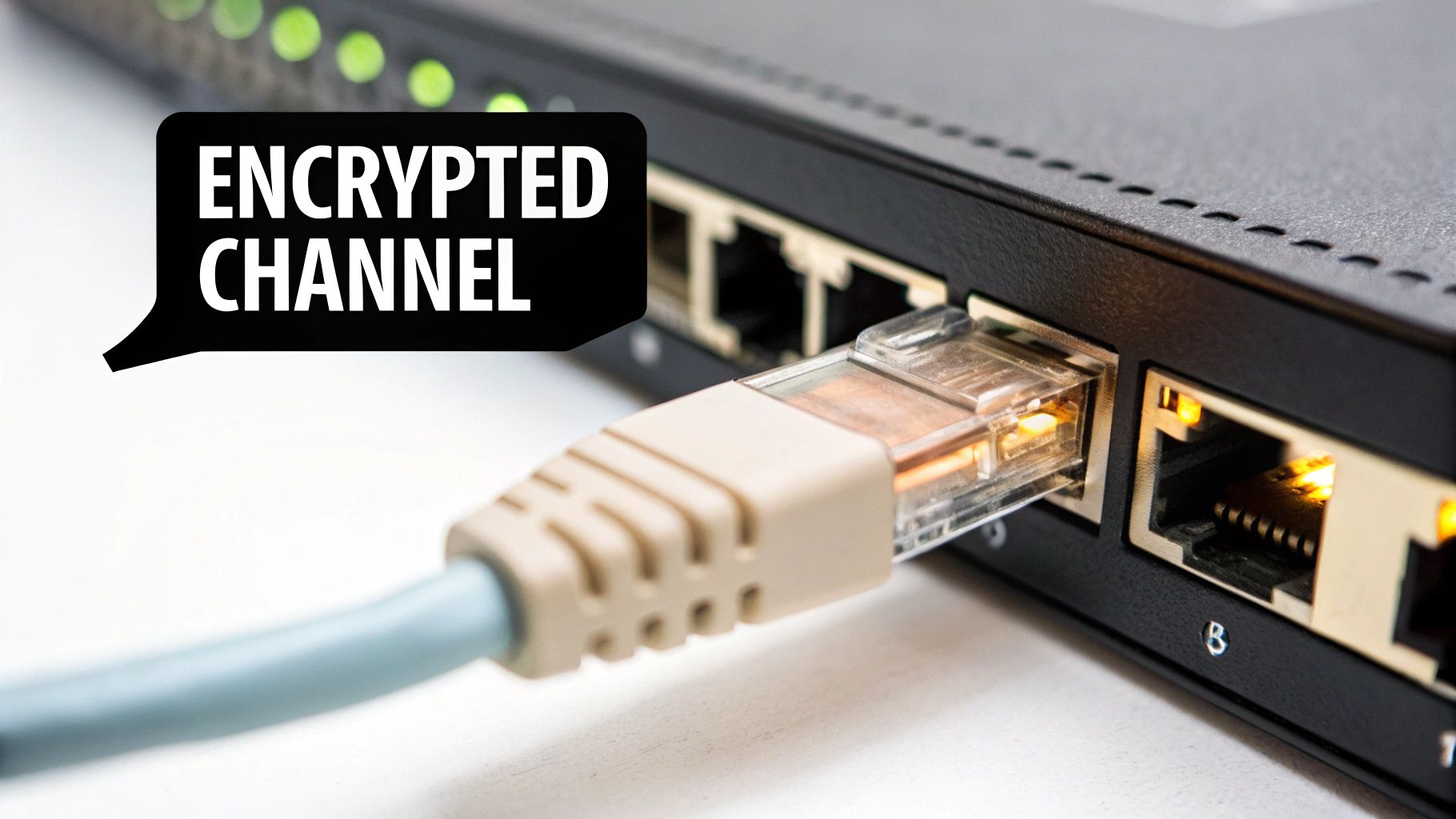
Failing to implement HTTPS leaves API communications exposed. Imagine an API transmitting sensitive financial data without encryption. An attacker could intercept this data, potentially leading to significant financial losses and reputational damage. HTTPS mitigates this risk by encrypting all transmitted information.
Why HTTPS and TLS Matter
HTTPS and TLS are fundamental for API security. They provide a secure channel for all communications, protecting sensitive data from unauthorized access and modification. This is particularly critical for APIs handling financial transactions, personal information, or other confidential data. Using HTTPS builds trust with users, demonstrating a commitment to data security.
Examples of HTTPS and TLS in Action
Numerous services demonstrate the importance of HTTPS and TLS:
Payment Processors: Stripe, PayPal, and Square all mandate HTTPS for all API interactions, safeguarding financial transactions.
Banking APIs: Banks often require TLS 1.2 or higher for their APIs, ensuring strong encryption for sensitive customer data.
Healthcare APIs: HIPAA compliance necessitates the use of HTTPS to protect patient health information (PHI).
Implementing HTTPS and TLS: Best Practices
Here's how to effectively implement HTTPS and TLS for your APIs:
Use TLS 1.2 or Higher: Older TLS versions have known vulnerabilities. Prioritize TLS 1.2 or higher for optimal security.
Implement Certificate Pinning (Mobile Apps): Certificate pinning enhances security for mobile apps by preventing connections to servers with fraudulent certificates.
Enable HSTS Headers: HTTP Strict Transport Security (HSTS) forces browsers to connect to your API only over HTTPS, even if the user attempts to access it via HTTP.
Use Strong Cipher Suites: Choose strong cipher suites to provide robust encryption and protect against known vulnerabilities.
Regularly Update and Renew Certificates: Expired or compromised certificates can weaken security. Ensure timely updates and renewals.
By implementing these api security best practices, you can significantly enhance the security of your APIs and protect sensitive data in transit. HTTPS and TLS are essential components of a comprehensive API security strategy.
5. Comprehensive API Logging and Monitoring
API logging and monitoring are crucial for maintaining API security and performance. Logging captures detailed information about API requests, responses, errors, and system behavior. This creates an audit trail for tracking activity and diagnosing issues. Monitoring, on the other hand, provides real-time visibility into API performance and security events, enabling rapid incident response and proactive threat detection. Together, these practices form a powerful defense against security threats and performance bottlenecks.
Why Comprehensive Logging and Monitoring Matters
Without adequate logging and monitoring, identifying and responding to security incidents becomes significantly more challenging. Imagine a scenario where an attacker is exploiting a vulnerability in your API. Without proper logs, you might not even be aware of the breach until significant damage has been done. Real-time monitoring can alert you to unusual activity, allowing you to quickly identify and mitigate threats. This proactive approach minimizes the potential impact of security breaches and ensures the ongoing integrity of your API.
Examples of Logging and Monitoring Tools
Several powerful tools can enhance your API logging and monitoring capabilities:
AWS CloudTrail: Provides audit logs of API calls made within your AWS environment, enabling detailed tracking of activity and compliance verification.
Datadog: Offers real-time performance monitoring for APIs and other infrastructure components, allowing you to quickly identify and resolve performance issues.
Splunk: Facilitates security event analysis by collecting and indexing log data from various sources, empowering you to detect and respond to security threats effectively.
ELK Stack (Elasticsearch, Logstash, Kibana): A powerful open-source solution for log management, providing comprehensive log aggregation, analysis, and visualization.
Implementing Comprehensive Logging and Monitoring: Best Practices
Here's how to enhance your API logging and monitoring strategy:
Log Security Events (But Not Sensitive Data): Capture details like timestamps, IP addresses, user IDs, and request parameters. Avoid logging sensitive data like passwords, credit card numbers, or API keys.
Structured Logging: Implement consistent log formats (e.g., JSON) to facilitate easier parsing and analysis.
Automated Alerting: Set up alerts for suspicious activities, such as unusual traffic patterns, error spikes, or unauthorized access attempts. Learn more about... to improve your API security posture.
Correlation IDs: Use unique identifiers to track requests across multiple services, simplifying debugging and troubleshooting.
Log Rotation and Retention: Implement policies to manage log storage and ensure compliance with regulatory requirements.
By incorporating these API security best practices, you can gain valuable insights into API activity, detect and respond to security threats effectively, and optimize API performance for a seamless user experience. Implementing robust logging and monitoring mechanisms is a cornerstone of a secure and reliable API infrastructure.
6. Error Handling and Information Disclosure Prevention
API security best practices emphasize careful error handling to prevent information leakage. Proper error handling provides helpful feedback to legitimate users without revealing sensitive system details to potential attackers. This involves returning generic error messages for security-related issues while maintaining detailed internal logs for debugging.
Imagine a banking API returning "Invalid transaction" instead of specifying, "Insufficient funds in account X." This protects sensitive account information while still guiding the user.
Why Error Handling and Information Disclosure Prevention Matters
Poor error handling can inadvertently expose internal system details, database schemas, or even the existence of specific files. Attackers can leverage this information to exploit vulnerabilities and compromise systems. Thorough error handling prevents these disclosures, bolstering API security. By obscuring internal details, APIs remain resilient against probing attacks.
Examples of Secure Error Handling
Several real-world examples demonstrate effective error handling:
Authentication Systems: Returning "Invalid credentials" for both incorrect usernames and passwords prevents attackers from enumerating valid usernames.
E-commerce APIs: Hiding inventory levels in error messages prevents competitors from gaining insights into stock levels and supply chain dynamics.
Payment Processors: Masking card validation errors prevents attackers from gathering information to conduct fraudulent transactions.
These examples illustrate how carefully crafted error responses can enhance security.
Implementing Secure Error Handling: Best Practices
Follow these best practices to implement robust error handling:
Standardized Error Responses: Create a consistent format for error responses, including an error code and a generic message. This simplifies error handling for clients and improves maintainability.
Use Error Codes: Employ error codes instead of detailed error messages for security-sensitive operations. This prevents information leakage while allowing internal tracking.
Detailed Internal Logging: Log detailed errors internally while returning generic messages externally. This facilitates debugging without exposing sensitive information.
Context-Aware Error Handling: Implement different error handling for various user roles. Administrators might receive more detailed error information than regular users.
Regular Review: Regularly review and update error messages to minimize information disclosure risks. Ensure messages remain generic and do not inadvertently reveal system details.
By implementing these API security best practices, you can balance user-friendliness with robust security, ensuring that APIs remain informative without compromising sensitive information.
7. API Versioning and Deprecation Management
API versioning allows multiple versions of an API to coexist. This enables backwards compatibility while introducing new features or security improvements. Proper deprecation management provides clients with adequate time and information to migrate to newer, more secure versions. This ensures service continuity during upgrades. This combined approach is a crucial element of API security best practices. It allows for evolution and improvement without disrupting existing integrations.
When considering API security best practices, versioning and deprecation are key for long-term maintainability. For example, failing to plan for versioning can lead to breaking changes that disrupt client applications. This highlights the importance of proactive deprecation management as part of a comprehensive API security strategy.
Why API Versioning and Deprecation Management Matters
Without proper versioning, changes to an API can break existing applications that rely on it. This can lead to downtime, data loss, and security vulnerabilities. Deprecation management gives developers time to adjust their applications before older versions are retired. This ensures a smoother transition and minimizes disruption. This proactive approach strengthens overall API security.
Examples of API Versioning and Deprecation Management in Action
Several prominent platforms showcase successful versioning and deprecation strategies:
Twitter API: The transition from v1.1 to v2, with an extended deprecation period, allowed developers to migrate smoothly while ensuring continued functionality.
Google APIs: Google often utilizes date-based versioning. This provides clear identification of API iterations. They also maintain comprehensive documentation for each version.
Stripe API: Stripe maintains multiple API versions with clear upgrade paths. This allows developers to choose the most suitable version for their needs. Clear documentation helps ease the transition to newer versions.
Implementing API Versioning and Deprecation Management: Best Practices
Here's how you can implement robust versioning and deprecation practices for your APIs:
Semantic Versioning: Use semantic versioning (major.minor.patch) to communicate changes effectively. Major version changes indicate breaking changes, while minor versions introduce new features without breaking existing functionality. Patch versions address bug fixes.
Clear Documentation: Provide comprehensive migration guides and tools to assist developers in updating their applications.
Sunset Policies: Implement version sunset policies with clear timelines for deprecation and end-of-life dates.
Version Specification: Use HTTP headers for version specification. This allows clients to specify the API version they want to use, simplifying compatibility management.
Security Patching: Maintain security patches for supported versions only. This encourages clients to upgrade to secure versions.
By adhering to these API security best practices, you can ensure a stable and secure platform for your users, facilitating smooth transitions between API versions and fostering a more reliable integration environment.
8. Secure API Gateway Implementation
An API gateway acts as a central point of entry for all API requests, enhancing security and streamlining management. It intercepts incoming requests and routes them to the appropriate backend services. This centralized approach allows for consistent implementation of security policies, traffic management, and other cross-cutting concerns. Think of it as a fortified gatekeeper, protecting your APIs from unauthorized access and managing the flow of traffic.
Implementing a secure API gateway is crucial for protecting your APIs and ensuring reliable performance. It allows you to enforce security policies consistently across all your APIs, simplifying management and reducing vulnerabilities. This centralized control is essential for modern API architectures, particularly when dealing with microservices or serverless functions. Learn more about securing your network infrastructure, which can be especially relevant when dealing with restrictions, with this resource on bypassing firewalls and creating private VPN servers.
Why Secure API Gateway Implementation Matters
Without an API gateway, security policies would need to be implemented individually for each API endpoint. This decentralized approach can lead to inconsistencies and vulnerabilities. An API gateway streamlines security by applying authentication, authorization, rate limiting, and other protective measures at a single point of entry. This greatly simplifies security management and ensures consistent protection across all APIs.
Examples of Secure API Gateway Implementations
Several organizations utilize API gateways to bolster their API security and management:
Netflix: Employs Zuul for routing requests within its microservices architecture. This helps manage traffic and ensure high availability.
Amazon: Offers Amazon API Gateway as a service for building and managing APIs for serverless applications and other backend services.
Kong: Provides Kong Gateway, a popular open-source API gateway for enterprise API management, supporting various plugins and extensions.
Implementing a Secure API Gateway: Best Practices
Here are some key practices for implementing a secure API gateway:
High Availability: Deploy multiple gateway instances to ensure continuous operation even if one instance fails.
Caching: Implement caching mechanisms to reduce the load on backend services and improve API response times.
Circuit Breakers: Utilize circuit breakers to prevent cascading failures by isolating failing services and preventing overload.
Monitoring: Continuously monitor gateway performance and health to identify and address potential issues proactively.
Infrastructure as Code (IaC): Manage gateway configurations using IaC for version control, automation, and reproducibility.
By following these api security best practices, you can effectively leverage an API gateway to enhance security, improve performance, and simplify API management.
API Security Best Practices Comparison Table
| Item | Implementation Complexity 🔄 | Resource Requirements ⚡ | Expected Outcomes 📊 | Ideal Use Cases 💡 | Key Advantages ⭐ |
| Implement Strong Authentication and Authorization | High – involves MFA, OAuth, RBAC | Moderate to High – token management, key storage | Strong access control, reduced breaches | Securing user access, multi-service APIs | Prevents unauthorized access, scalable |
| Input Validation and Sanitization | Moderate – schema and type checks | Low to Moderate – validation libraries | Data integrity, injection prevention | APIs handling user inputs, payment, accounts | Prevents injections, improves reliability |
| Rate Limiting and Throttling | Moderate – requires tuning algorithms | Moderate – monitoring and quota enforcement | Prevents abuse, maintains performance | High-traffic APIs, public APIs | Protects against DoS, manages fair usage |
| HTTPS and Transport Layer Security | Low to Moderate – cert management | Moderate – SSL/TLS certificates and renewals | Encrypted communication, prevents MITM attacks | Any API transmitting sensitive data | Protects data in transit, builds trust |
| Comprehensive API Logging and Monitoring | Moderate – extensive logging setup | High – storage and real-time monitoring | Incident response, forensic analysis | Security-sensitive or compliance-heavy APIs | Enables rapid response, supports compliance |
| Error Handling and Information Disclosure Prevention | Low to Moderate – error message design | Low – logging and message control | Reduces info leaks, maintains UX | Any API needing secure error handling | Prevents info leakage, supports debugging |
| API Versioning and Deprecation Management | Moderate – multi-version management | Moderate – documentation and support | Backwards compatibility, smooth upgrades | Long-lived APIs with evolving functionality | Enables safe updates, maintains stability |
| Secure API Gateway Implementation | High – centralized architecture | High – gateway infrastructure and HA setup | Centralized security, traffic and policy control | Enterprise and microservices APIs | Simplifies security, improves monitoring |
Building a Secure API Foundation for the Future
This article has explored eight crucial API security best practices. These practices form the bedrock of a robust and reliable API infrastructure, protecting your valuable data and ensuring a trustworthy user experience. From authentication to API gateway implementation, each practice plays a vital role in mitigating security risks and bolstering your application's defenses. Let's recap the key takeaways:
Core Principles for API Security
Strong authentication and authorization: Robust mechanisms to verify user identities and control access are fundamental. Implement multi-factor authentication and role-based access control for enhanced security.
Input validation and sanitization: Treat all incoming data as potentially malicious. Thorough input validation prevents vulnerabilities like injection attacks. Sanitize data to remove harmful characters and ensure data integrity.
Rate limiting and throttling: Prevent abuse and denial-of-service attacks by controlling the rate of API requests. Implement sensible limits and throttling mechanisms to maintain API availability.
Essential Security Layers
HTTPS and Transport Layer Security: Encrypt all communication between clients and your API using HTTPS. This ensures data confidentiality and integrity during transit.
Comprehensive logging and monitoring: Track API activity diligently to identify suspicious patterns and potential breaches. Regularly review logs and set up alerts for critical events.
Error handling and information disclosure: Carefully craft error messages to avoid revealing sensitive information. Implement robust error handling to gracefully manage unexpected situations.
Future-Proofing Your API
API versioning and deprecation: Manage API evolution effectively by implementing versioning. Clearly communicate deprecation schedules to allow developers to adapt to changes.
Secure API gateway implementation: Use an API gateway to centralize security policies, manage traffic, and protect backend services. This provides a single point of control for API security.
Mastering these API security best practices is an investment in the long-term success of your projects. By prioritizing security from the outset, you minimize the risk of data breaches, maintain user trust, and ensure your applications remain resilient against evolving threats. Regularly review and update your security measures to stay ahead of emerging vulnerabilities and incorporate the latest best practices. Focusing on continuous improvement in your API security posture will pay dividends in the long run, safeguarding your applications and fostering user confidence.
For expert guidance on setting up secure backend environments, seamlessly integrating with third-party APIs, and building a resilient infrastructure to support your API development, consider leveraging the services and tools offered by Sohaib Ilyas. His expertise in API security can help you take your security measures to the next level. Visit Sohaib Ilyas to explore his services and strengthen your API security today.


